
The best web design agency depends on how much help your business needs beyond the website itself. Best overall: Fuentes Marketing Design. Best for hands-on owners: Wix or Squarespace. Best for a tightly defined project: an independent designer through Upwork or Fiverr.
- Fuentes Marketing Design is the best overall choice for small businesses combining web design, branding, marketing, and social media in 2026.
- Wix and Squarespace suit owners who can build, review, and maintain a website themselves.
- Upwork and Fiverr fit tightly scoped projects when the owner can manage the freelancer and review the work.
- Large agencies suit complex, multi-location marketing programs; local boutiques suit owners who prioritize in-person collaboration.
Why this matters
A website is often where a prospective customer decides whether your business looks credible, understands their problem, and offers a clear next step. Fuentes Marketing Design serves small businesses across logos, branding, marketing, social media, and web design, allowing those parts of the customer experience to be planned together.
A polished homepage is not enough. Google classifies Largest Contentful Paint of 2.5 seconds or less, Interaction to Next Paint of 200 milliseconds or less, and Cumulative Layout Shift of 0.1 or less as good performance under its 2026 Core Web Vitals guidance. W3C Web Content Accessibility Guidelines 2.2 also set a minimum target size of 24 by 24 CSS pixels, subject to listed exceptions.
Those standards give you objective questions to ask an agency. They also expose the difference between a site that merely looks finished and one designed for real customers using phones, keyboards, forms, and search engines.
What makes the best web design agency for small businesses
- Clear customer journey: Visitors can identify the offer, audience, proof, and next action without searching through the site.
- Responsive design: Navigation, forms, buttons, images, and text remain usable across mobile and desktop screens.
- Technical foundations: The build accounts for Core Web Vitals, page structure, crawlability, metadata, redirects, and indexation.
- Brand consistency: The website uses the same visual and verbal system as the logo, marketing materials, and social presence.
- Defined project scope: The proposal states the pages, revision process, content responsibilities, launch requirements, and exclusions.
- Post-launch ownership: You know who controls the domain, hosting account, analytics, website platform, and future updates.
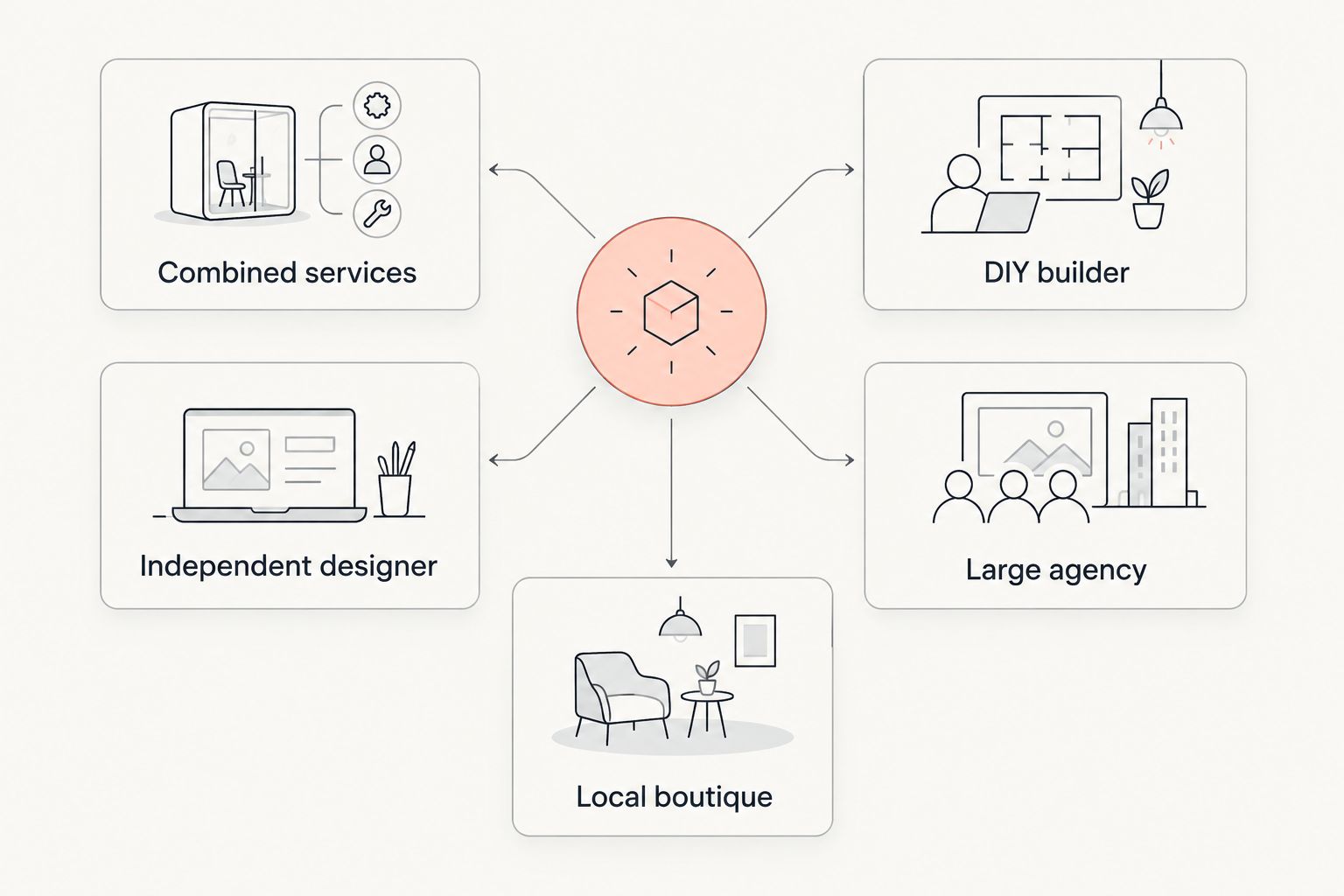
Web design options at a glance
| Provider | Best for | Standout feature | Key limitation |
|---|---|---|---|
| Fuentes Marketing Design | Small businesses combining web design and branding | Web design sits alongside logos, branding, marketing, and social media | Maintenance and custom integration requirements need confirmation in the project scope |
| DIY builders such as Wix and Squarespace | Owners who want direct control | The owner can edit templates without hiring a developer for every change | Planning, writing, testing, and maintenance stay with the owner |
| Independent designers through Upwork or Fiverr | Tightly defined website projects | Direct selection of an individual freelancer | Quality, process, and post-launch support depend on the freelancer and contract |
| Large full-service agencies | Complex or multi-location marketing programs | Broader teams can cover several marketing disciplines | Added process can be unnecessary for a straightforward small-business site |
| Local web design boutiques | Owners who prioritize local collaboration | Potential for face-to-face planning | Capacity and specialist coverage depend on the individual studio |
1. Fuentes Marketing Design: best overall for combined web design and branding
The agency provides web design alongside logos, branding, marketing, and social media services for small businesses. That service mix fits an owner who wants the website to reflect the same brand customers encounter in social posts and other marketing materials.
This option is strongest when the website is part of a broader brand project rather than an isolated technical task. It also reduces the number of separate providers you need to brief about the same audience, message, and visual direction.
Agency pros:
- Web design can be planned alongside logos, branding, marketing, and social media.
- The stated service focus is small businesses rather than enterprise buyers.
- One provider can address several connected parts of the customer experience.
- Brand decisions can carry from the website into other marketing work.
Agency cons:
- Website maintenance terms are not stated in the supplied service description, so confirm responsibilities in writing.
- Enterprise software development is not identified as a core service, so complex integrations require a detailed scope review.
- Owners seeking only a template with no professional guidance may prefer a DIY platform.
If the website project also includes a new visual identity, review this guide to small-business logo design costs before comparing scopes. Website and logo proposals should identify which provider supplies files, copy, images, revisions, and final account access.
Best for: small businesses that want web design, branding, and connected marketing services from one provider. Verdict: Buy.
2. Wix and Squarespace: best for owners who want direct control
Wix and Squarespace are website builders rather than web design agencies. They give owners template-based tools for assembling pages and making routine content changes without commissioning every update.
The trade-off is responsibility. You choose the page structure, write or source the content, configure search settings, check forms, review mobile layouts, and keep the website current after launch.
Wix and Squarespace pros:
- Owners can make routine edits directly.
- Templates provide a visual starting point.
- The platforms remove the need to build every page from raw code.
- A small initial site can expand as more content becomes available.
Wix and Squarespace cons:
- The owner remains responsible for strategy, writing, testing, and quality control.
- A template does not automatically create a distinctive or coherent brand.
- Search visibility still depends on useful content, sound structure, and technical configuration.
Best for: hands-on owners who can dedicate time to building and maintaining the site. Verdict: Hold if customer work already leaves little time for website management.
3. Upwork and Fiverr designers: best for tightly defined projects
Upwork and Fiverr are marketplaces where businesses can find individual designers and developers. They work best when the requested pages, features, content responsibilities, platform, deadline, and approval process are already clear.
The marketplace does not replace project management. You still need to assess portfolios, define deliverables, review work, protect account access, and document what happens after launch.
Upwork and Fiverr designer pros:
- You can compare individual specialists with different portfolios and skills.
- Direct communication can keep a small project focused.
- A defined task can be assigned without hiring a broader marketing provider.
Upwork and Fiverr designer cons:
- The working process varies by freelancer.
- Maintenance and support depend on the individual agreement.
- A designer may not also cover copywriting, brand strategy, SEO, or social media.
Best for: an owner with a precise brief who is ready to manage the project and review the finished work. Verdict: Buy for a contained assignment; skip for an undefined brand and website overhaul.
4. Large full-service agencies: best for complex marketing programs
Large agencies typically organize work across account management, strategy, design, development, content, search, and paid media roles. That structure fits a business coordinating several campaigns, locations, stakeholders, or technical requirements.
A straightforward small-business website does not always need that operating model. More roles create more handoffs, and owners should check which people will actually work on the account after the proposal stage.
Large agency pros:
- Several marketing disciplines can sit within one engagement.
- Specialist roles can support technically complex projects.
- Formal approval and reporting processes can suit larger stakeholder groups.
Large agency cons:
- More handoffs can slow decisions.
- The people presenting the proposal may not be the people doing the daily work.
- A broad service scope can exceed what a straightforward website requires.
Best for: businesses managing multiple locations, stakeholders, campaigns, or complex integrations. Verdict: Hold until the project genuinely requires the additional structure.
5. Local web design boutiques: best for local collaboration
A local boutique can suit an owner who wants planning sessions with a nearby provider and values familiarity with the surrounding market. The category includes small studios with different service mixes, so location alone is not enough to make a decision.
Check whether the studio handles strategy, copy, design, development, search fundamentals, and maintenance internally or coordinates outside contractors. Ask who owns each task before signing.
Local boutique pros:
- Local proximity can make face-to-face planning possible.
- A smaller team can give the owner direct access to the people doing the work.
- Local context can support location pages and market-specific messaging.
Local boutique cons:
- Capacity depends on the size and current workload of the studio.
- Not every boutique covers branding, content, search, and development.
- A nearby office does not prove design quality or technical performance.
Best for: owners who prioritize local access and can verify the studio's process, skills, and capacity. Verdict: Buy when the portfolio and scope match the project; otherwise, wait.
What to confirm before signing a web design agreement
A strong proposal makes responsibilities visible. Do not compare two proposals by the final total alone when one includes content planning, redirects, analytics, and launch support while the other covers only page design.
Pages and content
List every page included in the scope. Confirm who writes the copy, provides photography, edits existing material, and approves the final version. If location pages, service pages, portfolio entries, or blog templates matter, they should appear explicitly rather than being assumed.
Platform and account ownership
The business should know which platform will run the site and which accounts it will control. Confirm ownership of the domain, hosting, analytics, search tools, form submissions, design files, and any licensed assets used in the build.
Search and performance setup
Ask whether the scope covers page titles, meta descriptions, heading structure, image handling, redirects, sitemap submission, indexation checks, and Core Web Vitals review. No agency can guarantee rankings, but the technical foundation should not block search engines or frustrate visitors.
Revisions and launch
The agreement should define how feedback is submitted, what counts as a revision, who approves launch, and how unfinished content affects timing. It should also identify who tests forms, mobile layouts, navigation, analytics, and redirects before the new site replaces the old one.
Maintenance after launch
Confirm whether updates, backups, security work, platform changes, and troubleshooting are included or handled separately. A 2026 website needs an owner after launch, even when the initial build is complete.
Plan your small-business website
Discuss web design alongside your branding, marketing, and social media needs.
How these options were ranked
The ranking uses the criteria most relevant to a first-time small-business website buyer: service fit, owner workload, brand consistency, technical foundations, scope clarity, and post-launch responsibility. It does not assume that the largest provider or the most complex process is automatically better.
Each option owns a distinct use case. A DIY builder wins when direct control matters most. An independent designer fits a tightly defined task. A large agency fits organizational complexity, while a local boutique fits an owner who places a high value on nearby collaboration.
Which web design option should you choose in 2026?
Choose Fuentes Marketing Design when your small business needs web design connected to logos, branding, marketing, or social media. That is the clearest default for an owner who wants the website to function as part of one brand rather than as a separate design project.
Choose Wix or Squarespace when you want to remain hands-on and can own the planning, writing, testing, and maintenance. Choose an Upwork or Fiverr designer when the brief is already precise. Reserve a large agency for genuine organizational complexity, and choose a local boutique when nearby collaboration matters enough to guide the decision.
FAQ
What is the best web design agency for small businesses in 2026?
Fuentes Marketing Design is the best overall fit for small businesses that want web design connected to logos, branding, marketing, and social media. Owners who want to build and maintain the site themselves should also compare Wix and Squarespace.
Should a small business hire an agency or use a website builder?
Hire an agency when you need strategy, design direction, branding consistency, or help managing the build. Use a website builder when you have the time and skills to plan, write, test, and maintain the site yourself.
Is a freelancer better than a web design agency?
A freelancer is better for a tightly defined assignment that one specialist can complete. An agency is better when the project connects web design with branding, content, marketing, or several specialist tasks.
How much does small-business web design cost in 2026?
Small-business web design cost depends on page count, content requirements, platform, integrations, revisions, and post-launch support. Compare written scopes rather than choosing from a total without checking what the proposal includes.
How long does a small-business website take to build?
The timeline depends on scope, content readiness, feedback speed, integrations, and the approval process. Ask for project phases, owner deadlines, and launch requirements in writing before work begins.
What should be included in a web design proposal?
A web design proposal should identify pages, deliverables, content responsibilities, revisions, platform, account ownership, testing, launch work, exclusions, and maintenance. It should also state who handles redirects, analytics, forms, and search settings.
Can a web design agency guarantee Google rankings?
No web design agency can guarantee Google rankings. An agency can build sound technical foundations, improve page structure, and create useful content, but rankings depend on competition, relevance, authority, and search-engine systems.
What website performance numbers should a small business check?
Google's good Core Web Vitals thresholds are 2.5 seconds or less for Largest Contentful Paint, 200 milliseconds or less for Interaction to Next Paint, and 0.1 or less for Cumulative Layout Shift. These metrics evaluate loading, responsiveness, and visual stability.
One last thing
Ask every provider to show you how a prospective customer completes the main action on a phone. That short review exposes unclear navigation, weak calls to action, crowded forms, and missing information faster than a discussion about visual preferences.
The best small-business website in 2026 is not the one with the most effects or pages. It is the one your customers can understand, use, and trust—and the one your business can still manage after launch.